How Future Healthcare Technology Is Elevating At Home Care
Discover how cutting-edge healthcare technology is revolutionizing at-home patient care, enabling better monitoring, personalized treatment, and improved quality of life for patients worldwide.
Dr. Emily Watson
Author
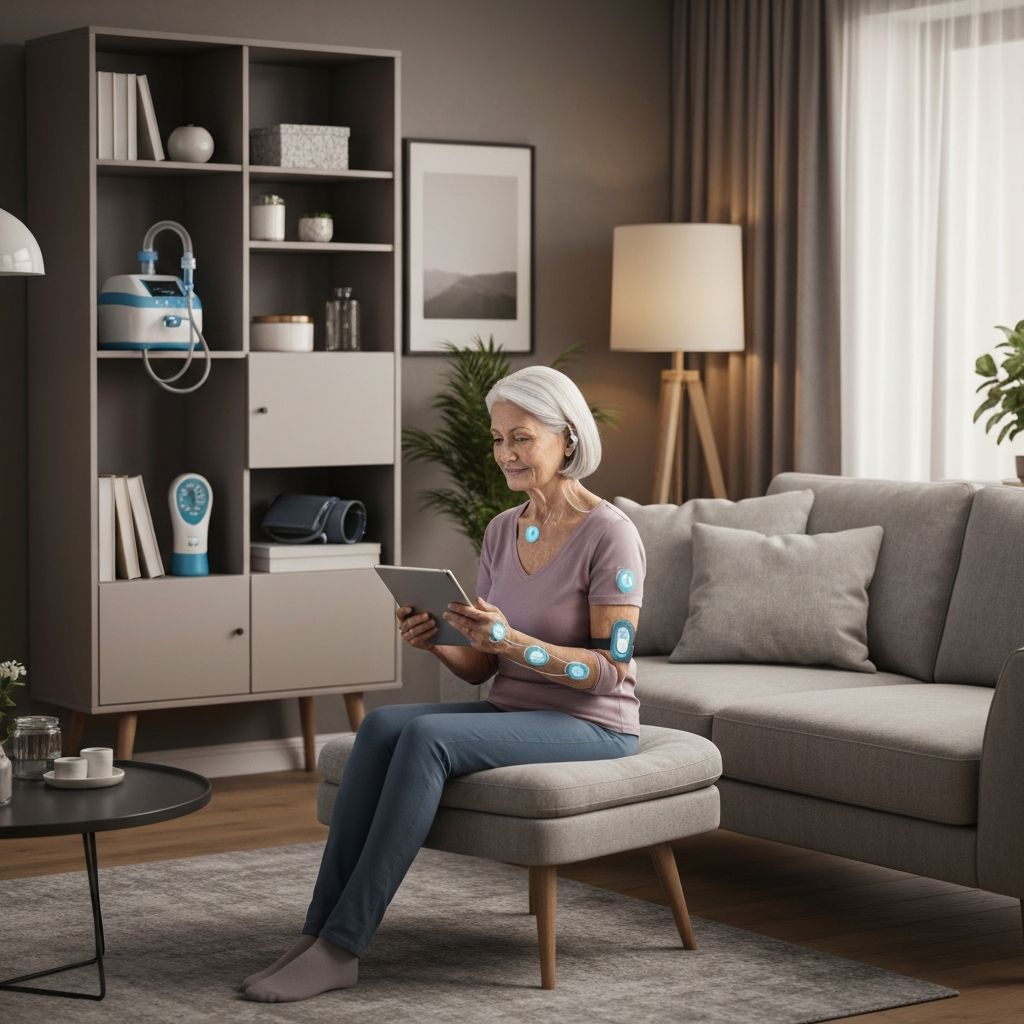
The landscape of healthcare is undergoing a profound transformation, driven by technological innovations that are bringing hospital-quality care directly into patients' homes. This shift represents one of the most significant changes in medical care delivery since the establishment of modern hospitals. Future healthcare technology is not merely supplementing traditional care models but fundamentally reimagining how we approach patient wellness, chronic disease management, and recovery processes within the comfort of home environments.
The Rise of Remote Patient Monitoring Systems
Remote patient monitoring has emerged as a cornerstone of modern at-home healthcare. These sophisticated systems utilize a network of connected devices that continuously track vital signs, medication adherence, and various health metrics. Patients can now have their blood pressure, heart rate, oxygen levels, glucose readings, and numerous other indicators monitored in real-time without stepping foot in a medical facility.
The technology behind these monitoring systems has advanced remarkably. Wearable devices have become smaller, more comfortable, and significantly more accurate than their predecessors. Smart patches that adhere to the skin can now monitor cardiac activity for weeks at a time, detecting arrhythmias and other anomalies that might be missed during brief clinical visits. These innovations are particularly valuable for elderly patients and those with chronic conditions who require continuous observation.
Healthcare providers receive this data through secure cloud platforms, allowing them to track patient progress and intervene promptly when readings indicate potential problems. Artificial intelligence algorithms analyze the incoming data streams, identifying patterns and predicting potential health events before they become emergencies. This predictive capability represents a fundamental shift from reactive to proactive healthcare delivery.
Telemedicine and Virtual Care Platforms
Telemedicine has evolved far beyond simple video consultations. Modern virtual care platforms integrate multiple technologies to create comprehensive healthcare experiences that rival in-person visits. High-definition video conferencing allows physicians to conduct visual examinations, while connected diagnostic devices enable remote physical assessments that were previously impossible outside clinical settings.
Virtual care platforms now incorporate digital stethoscopes that transmit heart and lung sounds to physicians in real-time. Otoscopes with camera attachments allow doctors to examine ears remotely, while dermatology applications use high-resolution imaging and AI analysis to assess skin conditions with remarkable accuracy. These tools have transformed telemedicine from a convenience into a legitimate alternative to traditional office visits for many conditions.
The psychological benefits of receiving care at home should not be underestimated. Patients often feel more relaxed and communicative in familiar surroundings, leading to more productive consultations. For individuals with mobility challenges, anxiety disorders, or compromised immune systems, the ability to receive quality care without traveling to medical facilities represents a significant improvement in their healthcare experience.
Smart Home Integration for Healthcare
The concept of smart homes has expanded to encompass healthcare applications that support independent living and health management. Voice-activated assistants can remind patients to take medications, guide them through physical therapy exercises, and even detect changes in speech patterns that might indicate cognitive decline or stroke symptoms.
Smart home sensors monitor daily activities, detecting deviations from normal patterns that could signal health problems. Motion sensors track mobility and sleep patterns, while smart pill dispensers ensure medication compliance and alert caregivers to missed doses. These ambient monitoring systems provide continuous oversight without requiring active participation from patients, making them ideal for elderly individuals or those with cognitive impairments.
Kitchen appliances have joined the healthcare ecosystem as well. Smart refrigerators can track food consumption and expiration dates, helping patients maintain healthy diets. Connected cooking devices can be monitored remotely, reducing risks for patients who might forget to turn off stoves or ovens. These seemingly simple integrations contribute significantly to patient safety and caregiver peace of mind.
Artificial Intelligence in Home Healthcare
Artificial intelligence is revolutionizing at-home care through multiple applications. Machine learning algorithms analyze patient data to predict health deterioration, enabling early interventions that prevent hospitalizations. Natural language processing powers chatbots that provide round-the-clock health information and triage support, helping patients determine whether their symptoms require immediate attention.
AI-powered diagnostic tools are becoming increasingly sophisticated. Applications can analyze photographs of wounds to assess healing progress, evaluate gait patterns to detect fall risks, and monitor facial expressions and voice characteristics to identify signs of depression or cognitive changes. These tools augment human healthcare providers, extending their reach and enabling more frequent patient assessments.
Personalized treatment recommendations generated by AI systems consider individual patient histories, genetic factors, lifestyle elements, and current health status to suggest optimized care plans. This level of personalization was previously impossible without extensive specialist involvement, but technology now makes it accessible to patients receiving care at home.
Robotic Assistance and Automation
Robotic technology is finding meaningful applications in home healthcare settings. Companion robots provide social interaction for isolated patients, reducing loneliness while monitoring health indicators. More advanced robotic systems assist with physical therapy exercises, ensuring proper form and providing encouragement throughout rehabilitation routines.
Medication management robots dispense prescribed drugs at appropriate times, verify that correct medications are taken, and maintain detailed logs for healthcare providers. These systems are particularly valuable for patients managing multiple medications, where adherence challenges and potential interactions pose significant risks.
Telepresence robots allow healthcare providers to conduct virtual home visits with mobility capabilities. Physicians can remotely navigate these robots through patients' homes, conducting more comprehensive assessments than stationary video calls permit. Family members can also use these systems to check on loved ones, providing additional oversight and emotional connection.
Challenges and Considerations
Despite tremendous advances, several challenges must be addressed as healthcare technology continues to evolve. Data privacy and security remain paramount concerns, as health information is among the most sensitive personal data. Robust encryption, strict access controls, and compliance with healthcare regulations are essential for maintaining patient trust.
Digital literacy varies significantly among patient populations, particularly among elderly individuals who may benefit most from at-home care technologies. User interfaces must be designed with accessibility in mind, minimizing complexity while maintaining functionality. Training and ongoing support are crucial for successful technology adoption.
Healthcare equity issues must be considered as well. Not all patients have access to reliable internet connections, modern smartphones, or stable housing situations conducive to technology-enabled care. Ensuring that technological advances benefit all populations, not just those with resources and connectivity, requires intentional effort and creative solutions.
The Economic Impact of At-Home Care Technology
The shift toward technology-enabled home care has significant economic implications. Hospital stays are among the most expensive components of healthcare, and reducing unnecessary admissions through better outpatient monitoring generates substantial cost savings. Insurance companies and healthcare systems are increasingly recognizing these benefits, expanding coverage for remote monitoring and telemedicine services.
Patients also benefit financially from reduced travel expenses, less time away from work, and lower out-of-pocket costs compared to traditional care models. Family caregivers, who often sacrifice employment opportunities to provide care, can leverage technology to maintain oversight while continuing professional activities.
Looking Toward the Future
The trajectory of healthcare technology points toward increasingly sophisticated at-home care capabilities. Augmented reality applications may soon guide patients through complex medical procedures, while advanced biosensors could provide laboratory-quality diagnostic information from home testing. Gene therapy and personalized medicine will require careful monitoring that technology will enable outside institutional settings.
The integration of healthcare technology with broader smart city infrastructure could enable emergency services to respond more effectively to home health crises. Connected ambulances might receive patient data before arrival, while hospital systems could prepare for incoming patients based on remote diagnostic information.
Conclusion
Future healthcare technology is fundamentally transforming at-home care, empowering patients to manage their health more effectively while maintaining connections with healthcare providers. The combination of remote monitoring, telemedicine, artificial intelligence, and smart home integration creates a comprehensive care environment that rivals traditional medical facilities for many conditions. As technology continues to advance and becomes more accessible, the vision of high-quality healthcare delivered wherever patients live will increasingly become reality. The future of medicine is not confined to hospitals and clinics but extends into the homes and daily lives of patients everywhere.
More from Technology
Continue exploring our curated collection of articles

SEO Computers: Choosing the Right Machine and Ranking a Computer Business Online
SEO computers explained two ways: the hardware specs that genuinely speed up SEO work, and how computer businesses rank for the searches that bring customers.
modern seo
How modern SEO actually works in the AI search era, based on 18 months of traffic data across 40 sites, including what stopped working and what never changed.
How AI Is Reshaping SEO and Content Marketing
Discover how AI is reshaping SEO and content marketing, from generative search and intent modeling to automated content workflows, E-E-A-T, and measurable results.