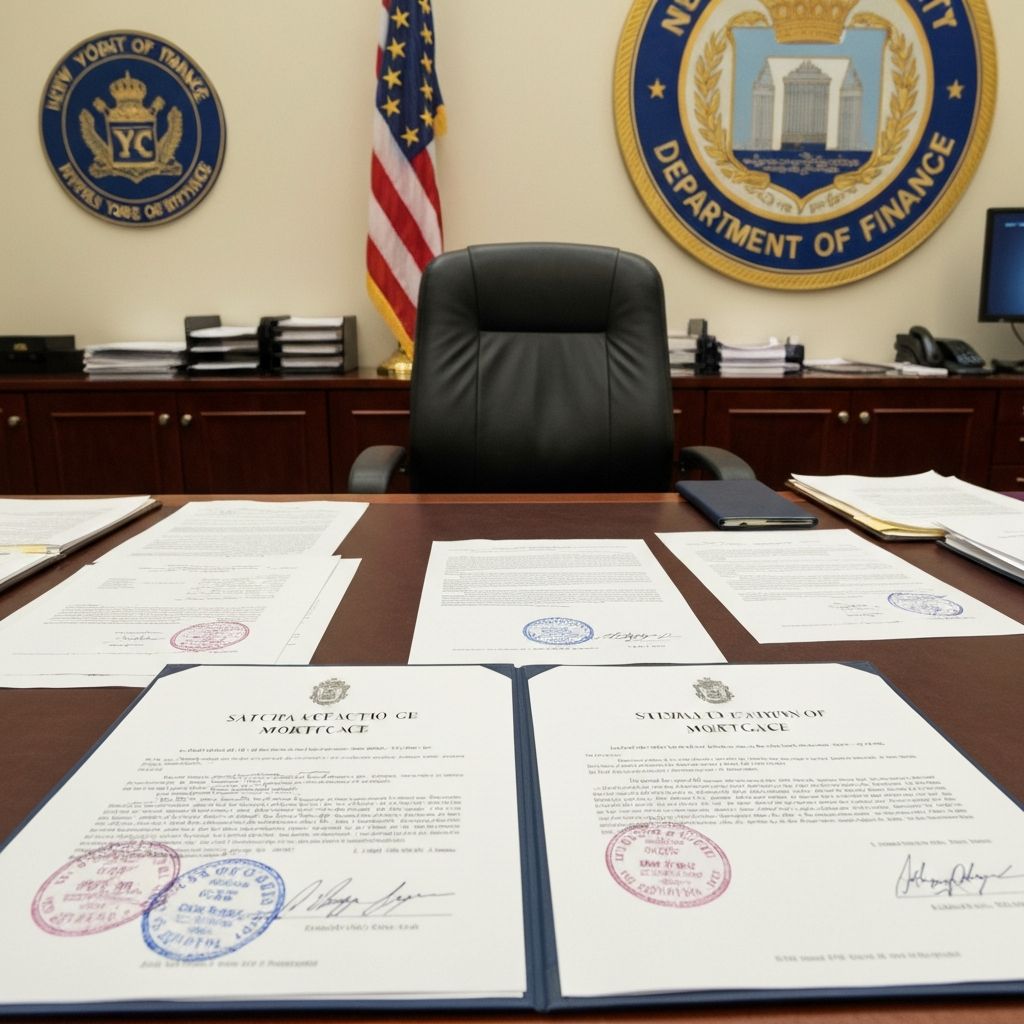
NYC Department Of Finance Document Type Satisfaction Of Mortgage
A comprehensive guide to understanding the NYC Department of Finance Satisfaction of Mortgage document, including filing procedures, requirements, and important considerations for property owners.
Michael Thompson, Esq.
Author
Understanding the intricacies of mortgage documentation is essential for any property owner in New York City. Among the most important documents processed by the NYC Department of Finance is the Satisfaction of Mortgage, a legal instrument that signifies the complete repayment of a mortgage loan. This comprehensive guide explores everything property owners need to know about this crucial document, from its purpose and components to the filing process and common challenges encountered along the way.
What Is a Satisfaction of Mortgage
A Satisfaction of Mortgage, sometimes called a mortgage discharge or release, is a legal document that confirms a borrower has fully repaid their mortgage debt. When recorded with the NYC Department of Finance, this document removes the mortgage lien from the property, providing clear title to the owner. Without this document properly filed, the mortgage remains as an encumbrance on the property records, potentially complicating future sales, refinancing, or other transactions.
The importance of this document cannot be overstated. Even after making the final mortgage payment, the public record will still show the mortgage as an active lien until the Satisfaction of Mortgage is properly recorded. This situation can create significant problems when attempting to sell or refinance the property, as title searches will reveal the outstanding lien.
The NYC Department of Finance Role
The New York City Department of Finance serves as the official repository for property records within the five boroughs. This agency maintains the Automated City Register Information System, commonly known as ACRIS, which provides public access to recorded documents including deeds, mortgages, and satisfactions. When a Satisfaction of Mortgage is submitted for recording, the Department of Finance reviews the document for compliance with statutory requirements before officially recording it in the public records.
The Department processes thousands of mortgage-related documents annually, maintaining the integrity of property records that underpin billions of dollars in real estate transactions. Their role in recording Satisfactions of Mortgage ensures that property owners receive clear title upon completing their mortgage obligations and that subsequent purchasers can rely on the accuracy of public records.
Components of the Satisfaction of Mortgage Document
A properly prepared Satisfaction of Mortgage must contain specific information to be accepted for recording. The document identifies the original mortgage being satisfied, including the recording information from when the mortgage was initially filed. This typically includes the document number, recording date, and the office where the original mortgage was recorded.
The satisfaction document names all parties to the original mortgage, including the borrower or borrowers and the original lender. If the mortgage has been assigned to another entity during its term, the satisfaction should reflect the current holder of the mortgage note. Proper party identification is crucial, as discrepancies between the satisfaction and the original mortgage can result in rejection or future title complications.
Property identification information must match the original mortgage precisely. This includes the property address, borough, block and lot numbers, and legal description. Any variations from the original mortgage documentation may require explanation or additional documentation to resolve.
The Filing Process with NYC Department of Finance
Filing a Satisfaction of Mortgage in New York City requires submission through the ACRIS system, either electronically or in person at the City Register offices. Electronic filing has become the predominant method, offering faster processing times and immediate confirmation of recording. The Department of Finance has invested significantly in modernizing its recording systems to facilitate efficient document processing.
Before submission, the document must be properly executed by an authorized representative of the mortgage holder. This typically requires notarization to verify the identity and authority of the person signing on behalf of the lending institution. Documents that lack proper execution will be rejected, delaying the recording process and potentially causing complications for property transactions.
Recording fees apply to Satisfaction of Mortgage filings, though these are relatively modest compared to other property recording costs. The fee schedule is established by statute and published by the Department of Finance. Payment must accompany the document submission, with various payment methods accepted depending on the filing channel used.
Timeframes and Statutory Requirements
New York law imposes specific obligations on mortgage holders regarding the preparation and delivery of Satisfactions of Mortgage. Under Real Property Law, lenders must provide a satisfaction or certificate of discharge within a specified period after receiving full payment of the mortgage debt. Failure to comply with these statutory timeframes can result in penalties and potential liability for damages suffered by the property owner.
The typical processing time for recording a Satisfaction of Mortgage through ACRIS is relatively quick for electronic submissions, often completed within a few business days. However, documents requiring additional review or those submitted during peak periods may experience longer processing times. Property owners planning transactions that depend on clear title should account for potential delays in their timelines.
Common Issues and Challenges
Several common issues can complicate the Satisfaction of Mortgage process. Corporate changes affecting the mortgage holder, including mergers, acquisitions, and name changes, can create confusion about which entity should execute the satisfaction. When the original lender no longer exists or has transferred the mortgage to another servicer, obtaining the proper satisfaction may require additional research and correspondence.
Lost or misplaced documents present another frequent challenge. If the original mortgage note cannot be located, the mortgage holder may need to provide additional affidavits or documentation before issuing a satisfaction. Similarly, if the satisfaction itself is lost after execution but before recording, obtaining a replacement can involve delays and additional costs.
Errors in the original mortgage recording can resurface during the satisfaction process. Incorrect property descriptions, misspelled names, or other defects in the original document may need to be addressed through corrective instruments before a clean satisfaction can be recorded. Title insurance companies often identify these issues during searches, requiring resolution before transactions can proceed.
The Importance of Verification
Property owners should always verify that their Satisfaction of Mortgage has been properly recorded after submission. The ACRIS system allows public searches of recorded documents, enabling property owners to confirm their satisfaction appears in the public records. This verification step provides peace of mind and creates documentation that the mortgage obligation has been formally cleared from the property.
Obtaining certified copies of the recorded satisfaction is advisable for important records. These certified copies serve as official evidence of the mortgage payoff and can be useful for various purposes, including resolving any future disputes about the property's title status.
Implications for Property Transactions
The status of mortgage satisfactions directly impacts property transactions throughout New York City. Buyers and their attorneys routinely search property records to identify any outstanding liens or encumbrances. An unrecorded satisfaction will appear as an outstanding mortgage on these searches, potentially derailing sales or requiring last-minute scrambling to resolve title issues.
Refinancing transactions are similarly affected. Before a new lender will provide financing secured by property, they require assurance that existing mortgages have been satisfied. An unrecorded satisfaction from a previous mortgage payoff can delay or prevent new financing from closing.
Working with Professionals
Given the complexity of real estate transactions and the importance of proper documentation, many property owners work with professionals throughout the mortgage satisfaction process. Real estate attorneys can review documents for accuracy and ensure compliance with recording requirements. Title companies often assist with obtaining and recording satisfactions as part of their closing services.
Mortgage servicers typically have dedicated departments handling satisfaction requests and preparation. Property owners should maintain communication with their servicers throughout the payoff process, confirming that satisfactions will be prepared and recorded promptly after final payment is received.
Digital Transformation and Future Developments
The NYC Department of Finance continues to modernize its systems and processes. Electronic recording has become standard, and additional technological improvements promise even greater efficiency in the future. Blockchain technology and other innovations may eventually transform how property records are maintained and accessed, though traditional recording systems remain firmly established for the present.
Conclusion
The Satisfaction of Mortgage represents a crucial document in the property ownership journey, formally acknowledging the completion of mortgage obligations and clearing liens from property records. Understanding the requirements and processes involved in obtaining and recording this document helps property owners protect their interests and avoid complications in future transactions. The NYC Department of Finance plays an essential role in maintaining accurate property records, and working within their established systems ensures that mortgage satisfactions are properly documented for all parties involved.
Frequently Asked Questions
What is the best way to start investing?
The best way to start investing is to first establish an emergency fund, pay off high-interest debt, then begin with low-cost index funds or ETFs. Start with whatever amount you can afford and invest consistently over time to benefit from compound growth.
How much money do I need to start investing?
You can start investing with as little as $1 with many modern platforms. The key is to start early and invest consistently, even if the amounts are small. Many brokerages offer fractional shares, making it accessible to begin building wealth immediately.
More from Finance
Continue exploring our curated collection of articles

Business Expenses Cut in Half Using AI Agents in 2026
Discover how companies are cutting business expenses in half using AI agents in 2026, the costs they target, real examples, and a roadmap to start saving.

Is AI Replacing Accountants? The 2026 Reality
Is AI replacing accountants? Explore what AI truly automates, which roles are safe, how the profession is evolving, and how to stay valuable in 2026.

AI Tax Software That Reads and Extracts Data From Documents
Discover how AI tax software reads and extracts data from documents, how the technology works, its benefits and risks, and how to choose the right tool.