Becoming an Artificial Intelligence Specialist: Career Path, Skills, and Opportunities
Comprehensive guide to pursuing AI specialist careers, essential skills required, educational pathways, job opportunities, and strategies for career advancement.
Robert Patterson
Author
The explosion in artificial intelligence adoption creates unprecedented career opportunities for professionals willing to develop specialized expertise. AI specialists—professionals combining deep machine learning knowledge with domain expertise and business acumen—command premium compensation and enjoy remarkable career mobility. This comprehensive guide examines career paths toward AI specialization, skills required for success, educational strategies, and strategies for advancing AI careers.
Defining the AI Specialist Role
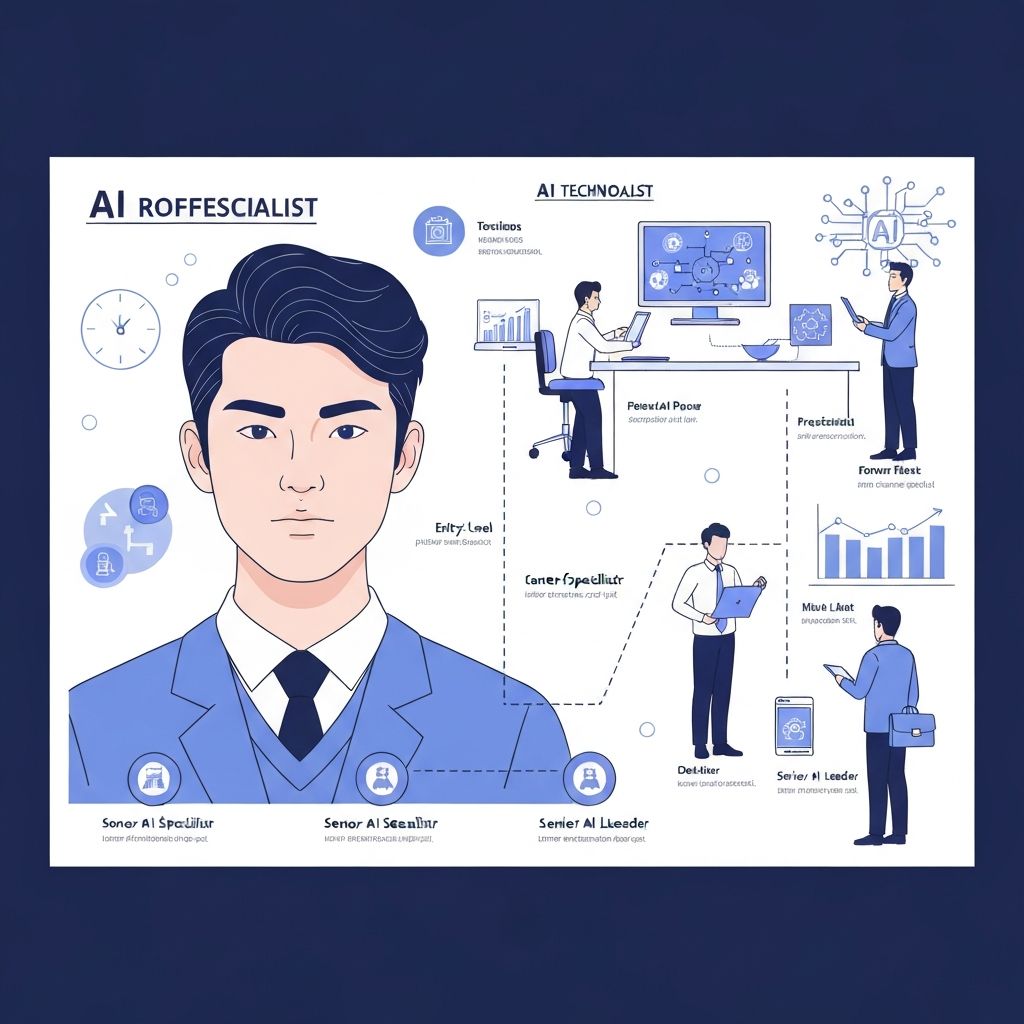
AI specialists occupy diverse roles reflecting AI's expansive applications. Some specialize in machine learning engineering, building systems that learn and improve from experience. Data scientists develop models and analyses driving business decisions. AI researchers advance fundamental AI capabilities through academic or corporate research. Prompt engineers optimize interactions with large language models. Ethics specialists ensure AI systems operate fairly and responsibly. This role diversity means aspiring AI specialists should identify specific specializations aligning with interests and strengths.
Skills for AI Specialists
Strong foundational skills distinguish AI specialists from generalist technologists. Advanced mathematics, particularly linear algebra, calculus, probability, and statistics, underpin machine learning theory. Understanding mathematical foundations enables specialists to understand why algorithms work, when they fail, and how to modify approaches addressing specific challenges.
Programming expertise in Python, R, and increasingly other languages represents essential practical capability. Specialists write code implementing algorithms, processing data, and building systems. While many frameworks abstract low-level implementation details, deep programming expertise enables optimization and novel algorithm implementation.
Data manipulation and analysis skills prove crucial. Real-world data rarely arrives perfectly formatted and clean. Specialists spend substantial time extracting, transforming, and validating data before training algorithms. Proficiency with data tools like SQL, pandas, and big data systems proves essential.
Machine learning framework expertise using TensorFlow, PyTorch, scikit-learn, and similar libraries enables practical algorithm implementation. Rather than building algorithms from scratch, specialists apply existing implementations to specific problems, customizing and optimizing as needed.
Domain expertise in specific application areas—healthcare, finance, e-commerce, transportation—enables specialists to understand problems deeply and develop solutions reflecting domain nuances. Healthcare specialists understand medical terminology, clinical workflows, and regulatory requirements. Finance specialists understand trading strategies, risk concepts, and market mechanics.
Business acumen enables AI specialists to identify problems where AI creates value, communicate with executives and business stakeholders, and ensure solutions address actual business needs rather than merely demonstrating technical sophistication.
Educational Pathways
Multiple educational routes lead toward AI specialization. Traditional computer science degrees provide foundational knowledge, though curricula vary significantly in AI emphasis. Specialized AI or machine learning degree programs provide concentrated AI education. Graduate programs offer deeper specialization, though significant time and financial investment may be required.
Online education platforms democratize AI education accessibility. Coursera, edX, Udacity, and similar platforms offer AI and machine learning specializations accessible to working professionals. These platforms enable learning while maintaining employment, though require substantial self-discipline and time commitment.
Self-study using free resources, textbooks, and online materials provides alternative paths. Motivated individuals can develop substantial AI expertise through dedicated self-education. However, self-study requires strong self-discipline, clear learning plans, and access to mentors providing guidance.
Bootcamps focused on data science and AI provide intensive, relatively short programs preparing students for AI careers. These programs condense learning into accelerated formats, accepting trade-offs between depth and breadth for rapid skill development enabling job market entry.
Building Experience and Credentials
Initial positions rarely demand extensive AI experience. Entry-level data science, junior software engineering, or analytics roles provide foundational experience. Early career professionals gradually develop skills, moving toward increasingly specialized AI roles as expertise grows.
Portfolio projects demonstrating capabilities prove valuable, particularly for career transitions from non-technical fields. Building end-to-end projects addressing real problems showcases practical skills and judgment. Open-source contributions demonstrate ability to write production-quality code and collaborate with others.
Certifications from reputable organizations validate capabilities and provide credentials. Google Cloud certification programs, AWS machine learning certifications, and professional certifications from academic institutions provide recognized validation of specific skills.
Publications and speaking engagements at conferences establish professional visibility and credibility. Sharing knowledge through technical writing and conference presentations positions professionals as thought leaders.
Specialization Directions
AI specialist expertise branches into multiple specialization directions. Machine learning engineering emphasizes building production systems, optimization, scalability, and reliability. These specialists operate at the intersection of data science and software engineering, building systems deploying models at scale.
Research-focused specialization emphasizes advancing AI capabilities through novel algorithms and approaches. Researchers typically pursue graduate degrees, publish papers, and operate in academic or corporate research environments.
Applications specialization combines AI with domain expertise in healthcare, finance, transportation, or other verticals. Specialists understand domain problems deeply and develop AI solutions reflecting domain requirements.
Emerging specializations like prompt engineering, working with large language models, or AI ethics represent newer specialist directions with growing demand.
Compensation and Career Progression
AI specialists command premium compensation reflecting specialized skills and high demand. Entry-level data science positions typically offer $70k-$100k compensation. Experienced specialists earn $150k-$250k+, with senior leadership roles potentially exceeding $300k.
Compensation varies significantly based on location, employer, specialization, and experience level. Tech hubs like San Francisco and New York command higher compensation than lower-cost regions. Large tech companies typically offer higher compensation and benefits than smaller companies or non-tech industries.
Career progression typically moves from analyst or junior engineer roles toward senior specialist positions, team leadership roles, and eventually executive positions. Specialists can choose technical career paths emphasizing deep expertise or management paths leading toward leadership roles.
Industry Trends and Future Opportunities
AI adoption continues accelerating across industries. Healthcare AI develops diagnostic systems and personalized treatment plans. Financial services use AI for risk assessment and algorithmic trading. Manufacturing deploys AI for quality control and predictive maintenance. These expanding applications create new specialist roles and career opportunities.
Large language models and generative AI create novel specialization opportunities. Prompt engineering and fine-tuning approaches develop as important specializations. Multimodal models combining language, vision, and other modalities create integration challenges and opportunities.
AI ethics and responsible AI specializations emerge as organizations recognize importance of fair, transparent, accountable systems. This specialization combines technical knowledge with ethics and policy understanding.
Challenges and Considerations
Rapid technology change requires continuous learning. Specialists who stop learning quickly become outdated as frameworks, algorithms, and best practices evolve. Successful careers require commitment to lifelong learning and adaptation.
Imposter syndrome affects many professionals in AI, despite actual expertise. The field's rapid evolution and the high visibility of cutting-edge research can make specialists feel inadequate despite substantial capabilities. Recognizing these feelings as normal and maintaining perspective on actual expertise helps navigate this challenge.
Work-life balance proves challenging at some organizations and roles. Certain positions, particularly startups pursuing rapid advancement, may demand extensive working hours. Identifying employers and roles offering appropriate balance proves important for long-term career satisfaction.
Conclusion
Artificial intelligence specialist careers offer compelling opportunities for technical professionals seeking challenging, well-compensated roles addressing significant problems. Success requires developing deep technical skills, domain expertise, business acumen, and communication capabilities. Multiple educational pathways enable entry into the field. Continuous learning, portfolio development, and strategic career choices enable progression toward senior specialist positions or leadership roles. As AI adoption accelerates across industries, specialist opportunities will continue expanding, offering talented professionals extraordinary career trajectories.
More from Career
Continue exploring our curated collection of articles

AI Attorney Jobs: Careers in Legal Tech for 2026
Explore AI attorney jobs in 2026, the emerging legal-tech roles, skills required, salary outlook, and how lawyers can build AI-powered legal careers.

Using AI for User Experience Design Jobs in 2026
Learn how to use AI for user experience design jobs in 2026, the tools reshaping UX work, the new skills required, and how designers stay indispensable.

Are Engineering Jobs at Risk From AI?
Are engineering jobs at risk from AI? Explore which engineering roles are exposed, which remain safe, and how engineers can future-proof their careers.