Panama Canal Drought Shipping News Today
Latest updates on the Panama Canal drought crisis affecting global shipping routes. Learn how water scarcity impacts international commerce and shipping timelines.
David Richardson
Author
The Panama Canal currently faces unprecedented challenges from severe drought conditions reducing water availability for vessel transit. This crisis directly impacts global shipping efficiency, affecting maritime commerce valued in trillions of dollars annually. Understanding the situation's scope, immediate consequences, and long-term implications requires examining the canal's operational mechanics and broader economic context.
Understanding Panama Canal Operations
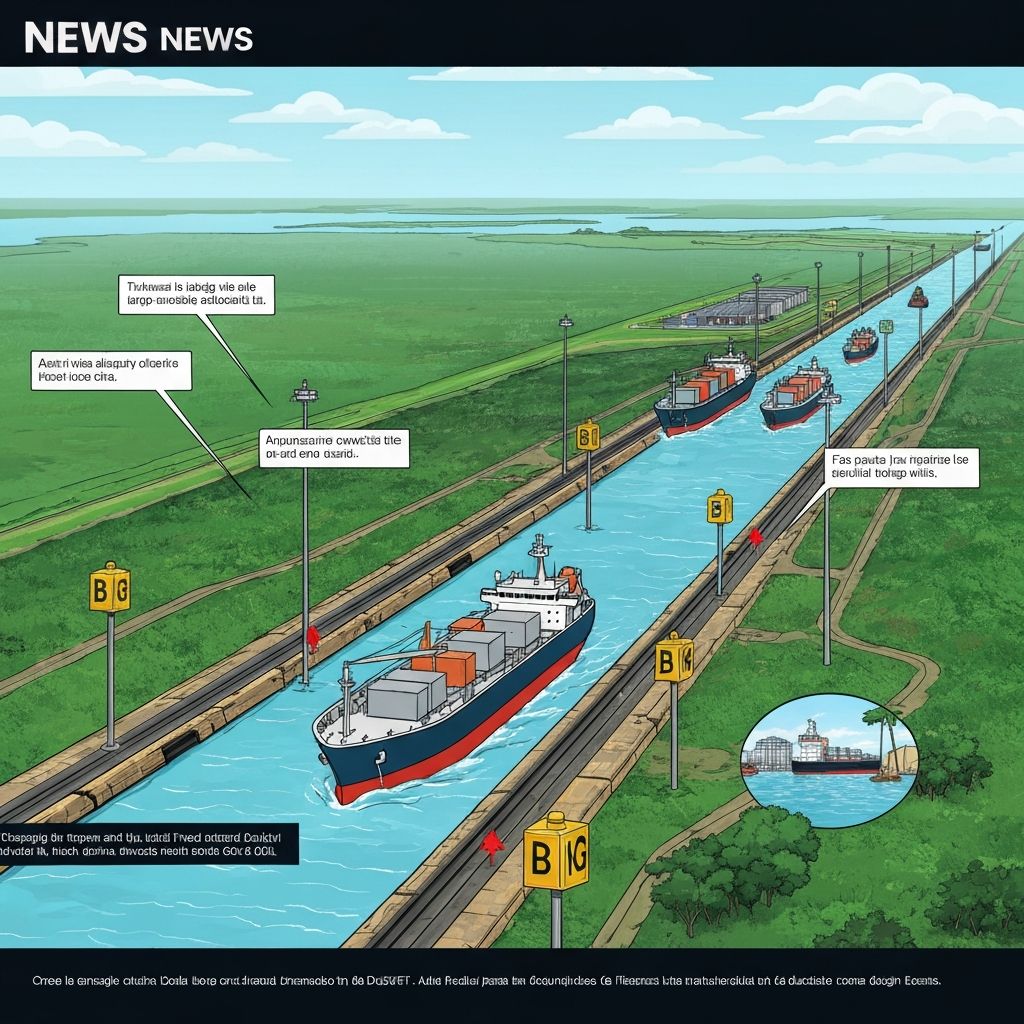
The Panama Canal represents one of world's most critical infrastructure assets, enabling approximately 6% of global maritime commerce to transit through its lanes annually. The canal fundamentally depends on freshwater from natural sources for operational continuity. Rather than pumping seawater through the canal, engineers designed systems utilizing freshwater lakes and reservoirs. Gatun Lake, created specifically for canal operations, serves as primary water source for the locking system enabling vessel transit.
The canal requires approximately 52.2 million gallons of freshwater per transit through three separate lock systems. Gatun Lake levels must maintain sufficient volume for daily operations while maintaining minimum navigation depths. Drought conditions that reduce water inflow to Gatun Lake directly jeopardize operational capacity, forcing reduced transit volumes or suspended operations.
Current Drought Conditions
Recent years have witnessed severe drought affecting Central America generally and Panama specifically. Climate patterns have disrupted traditional rainfall distributions that historically replenished water reservoirs. Lake levels have declined to concerning levels, approaching thresholds where normal operations become impossible. Scientists attribute drought intensity to climate change interactions with regional weather patterns.
Current drought represents the most severe conditions in recent decades. Water availability has restricted transit capacity to approximately 25-33 ships daily compared to normal capacity of 40+ transits. This reduction represents dramatic operational cutback affecting global shipping schedules. Extended transit delays and capacity restrictions create cascading consequences throughout global supply chains.
Immediate Economic Impacts
Shipping delays through the canal impose immediate financial consequences on global commerce. Maritime shipping companies experience increased costs from extended voyage durations, fuel consumption, and port waiting periods. Perishable cargo spoilage rates increase with extended transit times. Manufacturing and retail operations depending on timely inventory deliveries experience supply chain disruptions.
Alternative routing remains available though significantly more expensive and time-consuming. Vessels can transit around Africa via the Cape of Good Hope, extending transit durations from approximately 2 weeks through the canal to 5+ weeks via the southern route. This routing increases fuel consumption, extends maritime insurance coverage periods, and significantly increases overall transportation costs.
Shipping companies absorb many of these additional costs initially, though pressures to pass costs to consumers remain ongoing. Increased transportation costs eventually influence consumer prices for goods imported from Asian markets. The broader economic impact extends far beyond immediate shipping industry participants.
Global Supply Chain Disruptions
The canal's capacity restrictions create serious supply chain challenges for industries depending on timely maritime delivery. Manufacturing sectors utilizing components from Asian suppliers experience production delays. Retailers receiving container shipments face inventory availability challenges. Electronics, automotive parts, and consumer goods industries particularly depend on canal transit for efficient supply chains.
Companies accustomed to reliable transit schedules must adapt to unpredictability. Just-in-time manufacturing practices become risky when transit times become unpredictable. Companies increasingly maintain larger safety stock inventories, increasing carrying costs and storage requirements. Businesses adjust supply chain strategies to accommodate drought-related uncertainties.
Strategic alternatives including nearshoring and reshoring emerge as companies reconsider geographic sourcing to reduce canal dependence. Reshoring manufacturing to domestic facilities eliminates canal transit needs but typically increases production costs. Nearshoring to closer geographic sources like Mexico provides compromise approach reducing extreme transit dependencies.
Geopolitical and Strategic Dimensions
The Panama Canal's critical importance to global commerce makes drought impacts matters of international significance. Nations dependent on Asian imports express concern about supply chain vulnerabilities. The United States, as primary user of the canal route for Pacific-Atlantic trade, views operational challenges with strategic concern.
The canal's prominence in global infrastructure raises questions about infrastructure resilience amid climate change. Systems designed for historical climate conditions may become inadequate if climate change fundamentally alters water availability patterns. Infrastructure adaptation investments appear necessary to ensure long-term viability.
Panama's government faces political pressure to implement solutions addressing water scarcity while maintaining canal revenue. The canal generates substantial government revenue crucial to national economics. Operational restrictions impose financial pressures on Panama while generating international frustration about delayed commerce.
Short-Term Mitigation Efforts
Canal authorities have implemented water conservation measures attempting to optimize existing supply. Operational adjustments including modified transit scheduling and reduced lock cycle durations aim to conserve water while maintaining capacity. These measures provide temporary relief though cannot fully offset drought-related water deficits.
Dredging operations have been scaled back to conserve water typically used for maintenance. Channel depths have been reduced slightly, allowing slightly smaller draft vessels to transit while reducing water requirements. These compromises enable continued operations at reduced capacity while managing available water resources.
Desalination projects have been proposed as potential water supply alternatives, though implementation remains incomplete. Desalination requires substantial capital investment and ongoing operational costs. The scale required to significantly impact canal operations demands massive infrastructure development.
Long-Term Solutions and Adaptation
Substantial infrastructure investment appears necessary to address long-term drought risks. Reservoir expansion and improved water storage infrastructure could buffer against future drought conditions. Rainwater harvesting and alternative supply development might reduce canal water dependency.
Climate change adaptation strategies must address whether current operating models remain viable under changing climate conditions. Infrastructure designed for historical climate patterns may require fundamental redesign under new climate realities. Planning processes increasingly incorporate climate projection data informing infrastructure decisions.
International cooperation on infrastructure resilience has gained attention as stakeholders recognize shared interests. Improved weather prediction and early warning systems might provide adaptation time for affected parties. Investment in climate-resilient infrastructure positions Panama and global commerce to adapt to changing environmental conditions.
Conclusion
The Panama Canal drought represents complex challenge affecting global commerce, Panama's economy, and international trade relationships. While immediate impacts manifest through shipping delays and increased costs, longer-term implications demand systemic thinking about infrastructure resilience and climate adaptation. Solutions require international cooperation, substantial investment, and strategic vision extending beyond immediate crisis response.
More from News
Continue exploring our curated collection of articles

Location Of Area Code 941: Southwest Florida Guide
A complete guide to area code 941 in Southwest Florida including cities covered, time zone, dialing rules, history, and how to spot suspicious calls.

Area Code 920 Wisconsin: Complete Guide to Cities and Info
Explore Wisconsin's 920 area code including cities served, history, overlay codes, time zone details, and how to identify potential scam calls today.

Dangerous WebRAT Malware Now Being Spread by GitHub Repositories
A dangerous new WebRAT malware is spreading through GitHub repositories, targeting developers with infected code. Learn how to detect and stay safe.