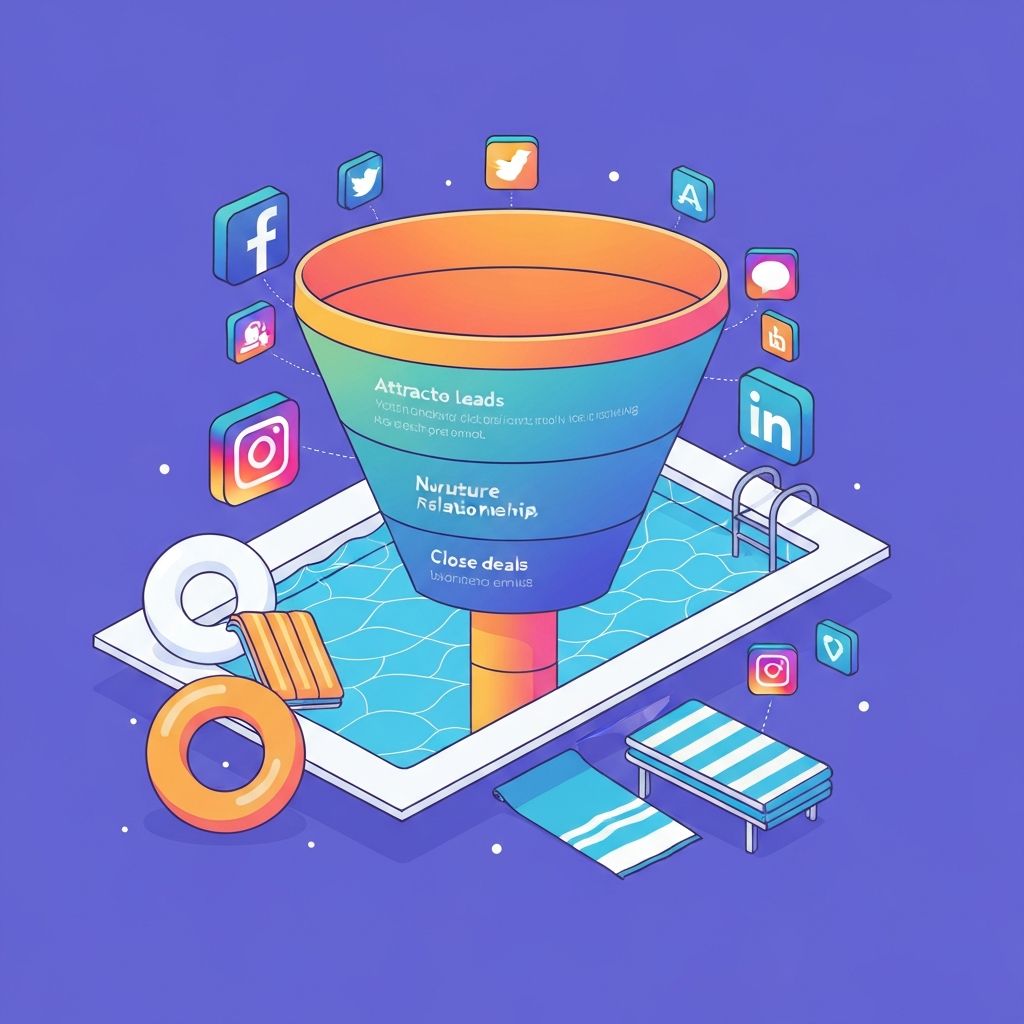
Digital Marketing For Pool Businesses Orange County
Effective digital marketing strategies specifically designed for pool cleaning, maintenance, and construction businesses in Orange County. Boost your online visibility and customer base.
Sarah Martinez
Author
The pool service industry in Orange County faces unique competitive pressures requiring sophisticated digital marketing approaches. As customers increasingly research services online before making purchasing decisions, digital presence directly influences business success. This comprehensive guide explores proven digital marketing strategies specifically tailored for pool businesses operating in Orange County's competitive market.
Understanding the Orange County Pool Service Market
Orange County represents one of California's most affluent regions with a concentration of residential properties featuring swimming pools. This demographic presents substantial business opportunities for pool cleaning services, maintenance companies, and installation businesses. However, established competitors and high customer acquisition costs create barriers to market entry and growth.
Seasonal variations affect pool service demand throughout the year. Summer months bring peak demand as homeowners prepare pools for increased use. Conversely, winter represents slower seasons when maintenance demand drops despite continued need for basic care. Understanding seasonal patterns helps businesses time marketing investments, promotional campaigns, and staffing adjustments for maximum effectiveness.
Local competition includes established regional companies and independent operators ranging from solo proprietors to larger service organizations. Competitive differentiation based on service quality, customer service, pricing, and reputation increasingly depends on digital visibility. Businesses unable to establish strong online presence struggle to compete regardless of operational excellence.
Building a Strong Online Foundation
An effective website serves as the cornerstone of digital marketing for pool businesses. Your website must clearly communicate your services, service areas, expertise, and competitive advantages within seconds of loading. Professional design conveys credibility while poor design undermines trust regardless of actual service quality. Responsive mobile design is essential since many customers research services using smartphones.
Website content should address customer questions and concerns throughout the service consideration process. Service pages detail specific offerings including pool cleaning frequency options, maintenance packages, and specialized services like acid washing or equipment repair. Service area pages clarify geographic coverage, crucial since many pool service customers require local accessibility. Pricing transparency or clear processes for obtaining estimates reduce customer hesitation.
Local SEO optimization ensures your business appears in search results when Orange County residents search for pool services. Google My Business optimization is essential, requiring accurate contact information, detailed service descriptions, professional photos, and regular updates. Local keywords like "pool cleaning Orange County" or "pool maintenance Huntington Beach" should appear naturally throughout your website content.
Leveraging Social Media Effectively
Social media platforms provide cost-effective channels for reaching potential customers and building community engagement. Facebook remains valuable for pool service businesses since customer demographics align with platform usage patterns. Instagram's visual nature suits before-and-after content showcasing transformation results from pool cleaning and restoration services.
Content strategy should balance promotional posts with educational and entertaining content that provides genuine value. Before-and-after photos demonstrate service quality and results dramatically. Educational posts about pool maintenance tips, seasonal preparation advice, and troubleshooting common issues position your business as knowledgeable industry expert. Customer testimonial videos and reviews build social proof influencing potential customer decisions.
Consistent posting schedules and community engagement drive algorithm recognition improving post visibility. Responding to comments and messages promptly demonstrates customer-focused values. Encouraging satisfied customers to share their experiences extends reach through organic sharing. Paid social advertising allows targeting by geography, demographics, and interests reaching potential customers efficiently.
Implementing Effective Local Advertising
Google Local Services Ads (LSA) connect pool service businesses directly with qualified customers actively seeking services. These ads appear at the top of Google search results when customers search for pool services in your area. LSA typically operate on pay-per-lead models, ensuring you pay only for genuine customer inquiries. This model suits pool service well since cost per lead remains predictable.
Local directory listings beyond Google My Business increase visibility across multiple platforms. Yelp, Angie's List, and HomeAdvisor aggregate customer reviews and business information in locations customers reference when comparing service providers. Consistent business information across directories prevents confusion and strengthens local SEO signals. Actively managing reviews on these platforms demonstrates commitment to customer satisfaction.
Facebook Local Ads target users within specific geographic areas with customized messages. Pool service businesses can target homeowners within service areas who demonstrate interest in home improvement or maintenance. Retargeting campaigns remind website visitors about your services, keeping your business top-of-mind as customers move through purchase decisions.
Reputation Management and Review Strategy
Customer reviews disproportionately influence pool service purchasing decisions, particularly for new customers lacking relationship history with businesses. Actively encouraging satisfied customers to leave reviews on Google, Yelp, and other platforms builds social proof. Simple follow-up systems requesting reviews via email or text after service completion increase review volumes.
Responding professionally to negative reviews demonstrates commitment to customer satisfaction despite occasional missteps. Apologizing for service failures, offering solutions, and showcasing willingness to resolve problems often satisfies dissatisfied customers while demonstrating integrity to prospective customers reading reviews. Ignoring negative reviews signals indifference, damaging business reputation more than the original complaint.
Video testimonials from satisfied customers provide authentic perspectives on your service quality and customer service approach. Video format increases emotional connection compared to text-only reviews. Featuring customer testimonials prominently on your website and social media builds credibility through third-party validation.
Email Marketing and Customer Retention
Email remains underutilized by many pool service businesses despite offering strong ROI. Building email lists from new customers and website visitors enables direct communication with audiences already familiar with your business. Regular newsletters sharing maintenance tips, seasonal recommendations, and service reminders keep your business top-of-mind.
Seasonal campaigns prompt customers to prepare pools for upcoming seasons. Spring newsletters remind customers about pool opening services and seasonal maintenance needs. Fall content addresses winterization recommendations and storm preparation. These campaigns convert existing customers into repeat customers while occasionally attracting prior customers returning after time away.
Promotional offers targeted to specific customer segments drive business during slower seasons. Email allows precise targeting of previous customers most likely to respond to specific offers. Birthday or anniversary promotions acknowledging customer relationships build goodwill while incentivizing service utilization.
Measuring and Optimizing Results
Tracking marketing performance prevents wasted spending on ineffective tactics while directing investment to highest-ROI activities. Setting up conversion tracking on your website measures customer actions following marketing exposure. Phone call tracking attributes phone inquiries to specific marketing sources. Form submissions on your website indicate lead generation success.
Analytics reveal which keywords, ads, and content drive customer inquiries. Understanding what attracts customers allows focusing resources on most-effective approaches. Underperforming tactics can be discontinued or modified based on performance data. Regular analysis drives continuous improvement and optimization.
Testing different marketing approaches through A/B testing refines campaigns. Comparing different ad copy, landing page designs, or targeting parameters reveals what resonates most strongly with your audience. Small improvements compound over time resulting in significantly better overall performance.
Conclusion
Digital marketing success for pool service businesses in Orange County requires coordinated approaches addressing multiple touchpoints in customer decision journeys. Strong websites, active social media, effective local advertising, reputation management, and strategic email marketing combine to build visible, credible business presence. Consistent effort and optimization directed by performance data accelerate results and sustainable growth.
Frequently Asked Questions
What is SEO and why is it important?
SEO (Search Engine Optimization) is the practice of optimizing websites to rank higher in search engine results. It's important because higher rankings lead to more organic traffic, increased brand visibility, and better conversion rates without paying for advertising.
How long does SEO take to show results?
SEO typically takes 3-6 months to show significant results, though some improvements can be seen within weeks. The timeline depends on factors like website authority, competition level, content quality, and the consistency of optimization efforts.
More from Digital Marketing
Continue exploring our curated collection of articles

Guaranteed Search Engine Optimization: What a Real Guarantee Actually Covers
Guaranteed search engine optimization sounds risky, and often is. Here is how to tell a real performance guarantee from a sales trick, with contract terms that hold.

Healthcare Search Engine Optimization: A Patient Acquisition Playbook That Respects Compliance
A practical healthcare search engine optimization playbook covering YMYL content standards, service line structure, local visibility, and privacy-safe measurement.

Las Vegas Search Engine Optimization: Winning a Market Built on Transient Demand
Las Vegas search engine optimization demands tactics built for tourists, locals, and event spikes. Here is the market-specific playbook that actually converts.